Showing posts with label mystery. Show all posts

Tuesday, April 19, 2016

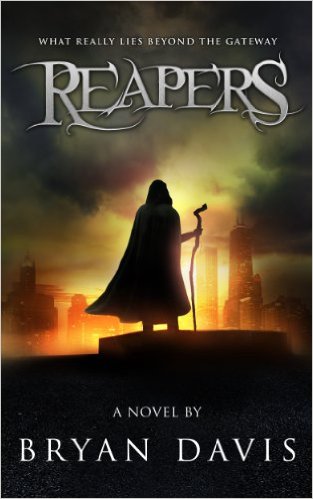
Book Review: Reapers (The Reapers Trilogy Book One)

Reapers (The Reapers Trilogy Book One) by Bryan Davis


Recommended For: Ages 13 to Adult

Rating: PG-13 (for violence and dead naked people)

Reapers, the first book in The Reapers Trilogy, is a dystopian tale with a supernatural twist. Taking place in a futuristic, urban setting, this first book in a planned trilogy will appeal to readers of The Hunger Games and similar fast-paced stories for young adults.

Along with a blend of real life and imagination, it delivers action, danger, and suspense through the adventures of three teenagers, Phoenix, Singapore, and Shanghai, Reapers who collect the souls of the dying of already dead and transport them to the Gateway where they will travel to their final destination...or so they are told.

I've always loved Bryan Davis's books. They're exciting, they're intense, they're complicated, and they're really weird. So when the first book in his Reapers trilogy was free for a couple days, I jumped at the chance to get it. Surprisingly, I was less than impressed with this book. It did not live up to the writing standard I had come to expect from Bryan Davis's books.

Writing: 3/5
I never thought I would get bored reading a Bryan Davis book. However, many times while reading this book, I wanted to put it down and had to force myself to keep reading. part of the reason I was incredibly bored was the very low stakes for the protagonist Phoenix. Nothing was at stake if anything went wrong, which brings me to the other thing that contributed to my boredom: hardly anything went wrong for the characters. It was ridiculous! They wound up just wandering around the concentration camp with a couple ghosts making useless plans that got destroyed in the climax.

Setting: 4/5
The world is actually pretty well-built. The settings were pretty vibrant, the descriptions were more than adequate. I could envision the world perfectly. (I left this review in the middle of this section and came back to it days later after being sick, so I honestly don't remember the exact reason I took away a point, though I know the reason was a good one.)

Plot: 2/5
Um...what plot? I...don't remember there being much of one. I feel really bad giving it such a low rating, but it honestly just didn't have much of a plot, and what was there was not made clear.

Character Development: 3/5
The main characters had no clear goals, and I'm not sure if Phoenix had any at all. They were flat, especially Phoenix, because absolutely nothing happened to stretch his character. He honestly didn't grow at all, he just changed his loyalties (and gosh it took one long boring book to do it!) The antagonist was pretty well done, though, and Mex. Honestly, Mex was more developed as  a side character than Phoenix was as a main character.

I probably wouldn't read the next book in the series if the opportunity arose, nor would I recommend this book. It just wasn't well-written, though maybe some other people would still enjoy it. I have always loved (most of) Bryan Davis's books, and I had expected to like this one as well, but it just wasn't good.

Wednesday, December 9, 2015

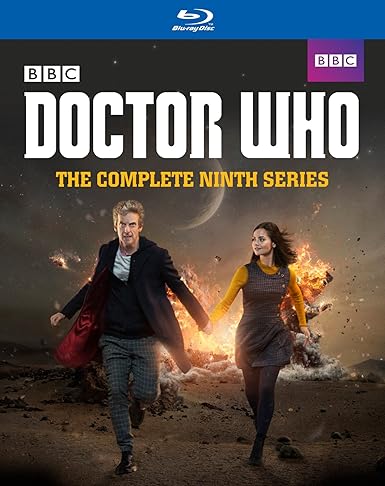
TV Show Review: Doctor Who Series 9

Doctor Who Series 9


Rating: PG

Recommended for: 10 to Adult

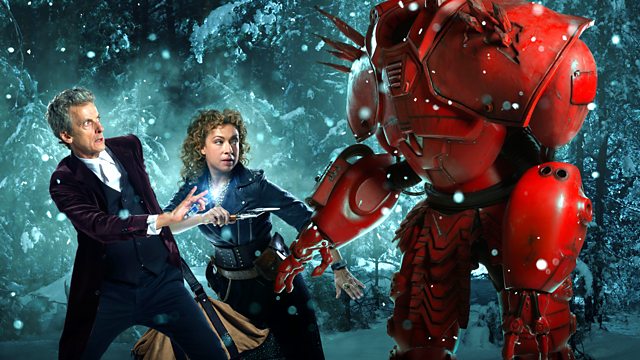
Peter Capaldi returns as the Doctor alongside Jenna Coleman and guests including Game of Thrones’ Maisie Williams. Now that the Doctor and Clara have established a dynamic as a partnership of equals, they’re relishing the fun and thrills that all of space and time has to offer. Tangling with ghosts, Vikings and the ultimate evil of the Daleks, they embark on their biggest adventures yet. 

Doctor Who Series 9 was great. At least, in my opinion. Peter Capaldi has settled into his role as the Doctor, he and Clara Oswald are getting along just fine now, they're traveling the universe together with no fear of danger, and they go on quite the journey together. There was very little I didn't like about this series. I don't know if I'm in the minority on this, I know my dad doesn't really like the Twelfth Doctor and didn't like Clara as much once the Impossible Girl mystery was solved, but I thought series 9 was really good.

The Magician's Apprentice/The Witch's Familiar

This was a truly interesting story. I'm not sure how much I can say without spoilers, but it revolves around the daleks and Davros. The end of the pre-titles scene had me loudly exclaiming. It involves Missy and Skaro, and wibbly-wobbly, timey-wimey. Aaaand we get to see the Doctor come in on a tank playing an electric guitar getting medieval people to yell "Dude!" We see the first of the Doctor's confession dial, basically a Time Lord's last will and testament, or so Missy says. This little object is actually quite important later on. Missy is a quite entertaining incarnation of the Master, and this really shows in this story, the only one of the series with her character. She does do some infuriating things (like trapping Clara inside a dalek), but things do work out in the end. An interesting theme is that of mercy. Because when [a certain character] asks the Doctor what side he's on, he replies that it doesn't matter, "as long as there's mercy." And yes, the sonic screwdriver is gone from this series (replaced by sonic sunglasses), but it didn't bother me since they've gotten rid of it before, in the Fifth Doctor episode "The Visitation."

Under the Lake/Before the Flood

This was kind of creepy, but I still loved it. There are ghosts. The Doctor originally insists that they're not really ghosts, but later...."They're ghosts!" And, yes, he's excited about it. The Doctor and Clara end up on an underwater base haunted by ghosts that only come out when it's in night mode, and can't get into the Faraday cage. A scientific team investigating an unearthed alien ship is aboard. They have to figure out what the ghosts are trying to do, without getting turned into ghosts themselves. The Doctor decides to go back in time to before the area flooded to find out the reason for it all. And Clara sees his ghost. There's a lot about paradoxes in this story. It's really very interesting. Things happen in the past, but they are based on things you know from the future, so where did it really originate? Who really wrote Beethoven's Fifth? One of my favorite things from the episode, though, is the cue cards. Clara is trying to help the Doctor with his people skills, so she gives him cue cards...which he's not great at using. But I really love the one that references Sarah Jane Smith: "It was my fault, I should have known you didn't live in Aberdeen." Very interesting story with great references.

The Girl Who Died

(Technically considered part one of a two parter, but while both stories center around Ashildr, the stories are distinct from each other, IMO.) The only episode in which I like Ashildr. This sets off an important part of the series 9 story arc. The Doctor and Clara end up in a Viking village terrorized by aliens claiming to be Odin. A girl named Ashildr is different from the other Vikings, and she's a skilled storyteller. After their soldiers are killed, Ashildr declares war, causing the villagers to have to fight against a merciless alien race. The Doctor is clever. And he can't leave people to die. But his plan has unforeseen consequences...and causes a very big change to happen to Ashildr. It was a good episode, going into the historical side of Doctor Who, a thing which doesn't seem to happen much anymore. It's sort of a set up for things to come later with Ashildr. And she's a character well played. By the way, the Doctor's face is explained in this episode. No, he's not actually Caecilius, but at least they give it an explanation.

The Woman Who Lived

Ashildr is back, in 1651 England, and she's not so happy about it. She's immortal now, due to events of "The Girl Who Died," calling herself Me, living with only a servant as a wealthy lady by day and acting as a masked highwayman by night. She's been alive for 800 years at this point, and is lonely. She's seen some very hard times, but it's only made her harsh. Maybe it's because with a finite mind she can't remember it all. Maybe it's being alone. She begs the Doctor to take her with him, but he refuses. I kind of felt like the story itself in this episode was a bit flat, but they more than made up for it with character and theme. It might just be because I've explored the idea in my own writing, but I find the subject of immortality/abnormally long life in this world to be a fascinating concept. It takes much the same stance on it that Natalie Babbitt did in Tuck Everlasting and that I did in Time Captives. You don't want to live forever in this world. It's not a good thing. Clara's absent for most of this episode, which I didn't like, but oh well.

The Zygon Invasion/The Zygon Inversion

Osgood is back! No, her death in the series 8 finale wasn't fake. But if you remember in "Day of the Doctor," human Osgood and Zygon Osgood became friends. One of them died. Which one? It doesn't really matter. The Zygons were assimilated into Earth's culture after those events, living as humans, which most of them were content to do. However, there are a few who want to take over Earth instead. The Zygons want the "Osgood Box" to destroy the humans, but the Osgood Box is not quite what it seems...and there's a very good reason it's called the Osgood Box. I tend to love it when they bring UNIT in, because it necessarily makes references abound. After all, Kate Stewart is the Brigadier's daughter. There are many throwbacks to "Day of the Doctor" and even "Terror of the Zygons" in this story. And then towards the end, the Doctor gives a great speech on the consequences of war and the necessity of forgiveness. He's fought in a very terrible war. He has done worse things than you can imagine. And he doesn't want anyone else to have to live with that.


Sleep No More

I...didn't really understand this episode. There's a machine called the Morpheus that concentrates a month of sleep into five minutes, but it somehow creates sand monsters from the dust that collects in your eyes while you sleep. It's supposed to be assembled from security footage from where it takes place, so the format is a bit different. It's kind of inconclusive too. I really just need to watch it again, because it's one of those episodes that doesn't make a lot of sense. It's supposed to be a scary episode, but I didn't understand it enough to be scared. Maybe next time...

Face the Raven

Get the tissues ready. Rigsy from "Flatline" calls Clara to ask for her help. A tattoo appeared on the back of his neck, a number...and it's counting down. And when it gets to zero, he will die. They learn that Ashildr put it there, and that death can only be avoided if she takes it off or if it's transferred to someone else. I'm not sure what to say about the rest of this episode or the remaining parts of the finale, because it's spoiler territory, but extremely important to the storyline. I really liked this episode, but I finished it in shock. I wasn't expecting that ending. And I really don't like Ashildr now.

Heaven Sent

The Doctor goes solo in this lead up to the ultimate finale of the season. Trapped in a castle in the middle of an infinite ocean, the Doctor is pursued by a mysterious shrouded figure called the Veil. He falls out a window, finds a drying set of his own clothes by a fire, digs up a grave, sees stars that indicate he's in the future even though he didn't time travel, punches a wall made of diamond but 400 times stronger, realizes that the rooms in the castle reset themselves and then...spoilers. This episode was very different. It's not usual for the Doctor to be without a companion. He's not Time Lord Victorious yet, that's more of the next episode, but the circumstances surrounding his companionlessness makes him very determined. And that ending! Great episode. My sister didn't love it because she doesn't like him without a companion, but it was still a really good episode.

Hell Bent

And then the very last episode of the series. I can't tell you the premise of the episode without spoiling the ending of "Face the Raven," but...it was a good episode. Hard. And the Doctor is really not doing well. It's like Time Lord Victorious all over again. There are Time Lords in funny hats, vague hints at the Doctor's past, Ashildr alone at the end of the world, the "hybrid" hinted at throughout the series becomes important, a scene with the Doctor and Clara in a diner that doesn't make sense until the very end, TARDIS stealing, "Journey's End" references. It's sad. It's epic. Wibbly-wobbly, timey-wimey. At the end, the Doctor is off alone, ready for a brand new companion to come in the next series. 

Doctor Who series 9 was far better than series 8, though I liked that series too. There are still unanswered questions, like where Orson Pink comes from, but I have confidence that it'll eventually be explained. Clara was great in her last series as companion. Peter Capaldi makes a great Doctor. Some interesting developments have come to the story in this series, and I'm looking forward to what comes next, seeing a new companion and new story in the next series. And seeing the sonic screwdriver back in action.

But before that comes "The Husbands of River Song." Because River is coming back for the Christmas special!


Monday, November 2, 2015

Book Review: The Scarlet Pimpernel

Sorry for the lack of posts last week. I...really don't have a good excuse. But we're back!

The Scarlet Pimpernel by Baroness Emmuska Orczy


Recommended for: Ages 12 to Adult (reading level, mild romance, action violence)

In the year 1792, Sir Percy and Lady Marguerite Blakeney are the darlings of British society—he is known as one of the wealthiest men in England and a dimwit; she is French, a stunning former actress, and the cleverest woman in Europe—and they find themselves at the center of a deadly political intrigue. The Reign of Terror controls France, and every day aristocrats in Paris fall victim to Madame la Guillotine. Only one man can rescue them—the Scarlet Pimpernel—a master of disguises who leaves a calling card bearing only a signature red flower. As the fascinating connection between the Blakeneys and this mysterious hero is revealed, they are forced to choose between love and loyalty in order to avoid the French agent Chauvelin, who relentlessly hunts the Scarlet Pimpernel.
 
My friends, especially my friend Ashley, told me that I had to read this book. I downloaded it to my kindle, and didn't really read it. Ashely kept getting onto me about reading it, and I would just be like, "yeah, I'm going to." I'd read a few chapters when I was half asleep and gotten completely lost on it, and I just kind of didn't care. I kept thinking I probably needed to just start over, but I had other things to read.

When Masked, a modernized webseries adaptation of The Scarlet Pimpernel, began, I started to think about this story again. After all, my friends wouldn't really let me avoid it. I watched the first episode. I hadn't really intended to, I wanted to read the book first, but Ashley posted it on her blog and so I went ahead and watched it. I didn't really know what to expect, and I can't say it really piqued my interest, but I saw the hype over this book. And perhaps got a bit of a spoiler, but I'm not mad.

After I listened to Little Dorrit, I found myself with a bit of a book hangover, and I didn't want to listen to anything else. But I had more sewing to do and my friends had been on me about this book for so long that I just said to myself, "fine, I'll listen to The Scarlet Pimpernel" and turned it on on Spotify.

I'm not sure when I realized "this is a really good book!" but it was long before that moment when it was at least half past midnight and I was telling myself I needed to put aside the sewing projects for the night, turn off the audio book, and not pick up my kindle to continue so I could actually go to sleep. It's just SOOOOO good. Even though my sewing project was very difficult, I wanted to work on it every possible moment because I just had to listen to more of The Scarlet Pimpernel.

I was told to just file away the information in the first few chapters and wait for Sir Percy to show up. It's when Sir Percy shows up that things really get going, before that it's admittedly a bit boring, but after? Oh my goodness, there's no putting that book down! The farther along the book gets, the more exciting it is, the more intense, the more nerve-wracking. I just had to know what would happen, if Marguerite would be able to avert the consequences of her desperate actions, or if her decisions would lead to the most horrendous outcome. 
 
It's clean, too. There is a romantic aspect to it, and there is a point where Marguerite really wants Percy to kiss her, but (1) they're married, and (2) this was written at the end of the Victorian era so it's still handled in a pretty clean way.

This book also made me think. At a time when miscommunications between people I know in real life were potentially hurtling things towards a very bad conclusion (thankfully averted), the fact that a little communication would have prevented the events of The Scarlet Pimpernel entirely really stuck out to me. So many things go wrong because people fail to communicate. It can destroy so much. Marguerite should have communicated with her husband, Sir Percy. They both loved each other so much, yet they were driven apart by a lack of vital communication.

I love the characters. I don't want to say which character I love so much because spoilers, but suffice it to say that I dreamed I was meeting him and having a really hard time not fangirling. In my dream. He's so brilliant and selfless and brave. And the forerunner of secret identity superheroes. How can it get any better than that? I also love Marguerite, of course. Sure, she's a character I want to tell what to do, but I still love her. And she turned out to be really brave too. Though she made a grievous mistake in trying to save her brother whom she loves so much, she does all she can to right it.

And the ending! So many twists. So much brilliancy. Such a perfect conclusion. But couldn't it have gone on forever? 

In short, The Scarlet Pimpernel is one of the best, most exciting classics I've ever read or listened to. Perhaps I used to be confused as to why so many of my friends love this book so much, but now I'm up there with the biggest fans among them. Highly recommended.

Monday, October 12, 2015

Book Review: Little Dorrit

Little Dorrit by Charles Dickens


Recommended for: Ages 13 to Adult (reading and interest level, mostly)

A novel of serendipity, of fortunes won and lost, and of the spectre of imprisonment that hangs over all aspects of Victorian society

When Arthur Clennam returns to England after many years abroad, he takes a kindly interest in Amy Dorrit, his mother's seamstress, and in the affairs of Amy's father, William Dorrit, a man of shabby grandeur, long imprisoned for debt in Marshalsea prison. As Arthur soon discovers, the dark shadow of the prison stretches far beyond its walls to affect the lives of many, from the kindly Mr Panks, the reluctant rent-collector of Bleeding Heart Yard, and the tipsily garrulous Flora Finching, to Merdle, an unscrupulous financier, and the bureaucratic Barnacles in the Circumlocution Office. A masterly evocation of the state and psychology of imprisonment,
Little Dorrit is one of the supreme works of Dickens's maturity. 
 
I'll just admit upfront, the main reason I chose Little Dorrit was because of the cast of the newest miniseries, primarily Arthur Darvill, Freema Agyeman, and Andy Serkis. I did know already that I love Dickens, so that was one factor in choosing to listen to this while sewing, if smaller than the cast influence. However, I was not prepared to love it as much as I do. It is my favorite Dickens book so far, it is just that good. I love it, and I can't wait to see the miniseries. I hear it's excellent.

Writing: 5/5

Dickens is a master of the English language. Sure, it's a little difficult to understand at times, but I guess people used to be smarter. But still, it really did pull me into the story. I was in the Marshalsea. I was with Arthur Clennam. I experienced what Amy Dorrit experienced. And I gotta say, I got really mad at the Dorrits when they were belittling Arthur. How dare they! But that's how invested Dickens made me in this story. Plus I loved the way the parts where Arthur was determined not to fall in love with Pet Meagles were written. It made me laugh.

Setting: 5/5

Dickens wrote about the world in which he lived, so I assume it was historically accurate. Little Dorrit focuses on debtor's prison, specifically the Marshalsea prison. It's rather different from what I expected out of a prison, it's not just a bunch of cells. They actually have rooms they stay in, and they have lots of visitors, it's just the actual prisoners of the Marshalsea obviously can't leave, and they do have a certain time every day when they lock the gates so no one can come in or out. As far as the settings outside of the Marshalsea go, they're pretty much the same as any other Victorian novel. I do quite love it.

Plot: 5/5

Dickens is a master. The plot is so complex, so many different storylines that come together in the end. I admit, I'm still a little confused about the ending, but, well, I'm confused about the ending of every Dickens book. Little Dorrit is a lot easier to follow than Bleak House, though. The story follows the Dorrit family and Arthur Clennam, primarily, but there are also plotlines involving characters such as Henry Gowan, the Meagles family, Miss Wade, etc. And there's Blandois, or Rigaud, whichever name he's using at the time. I don't want to spoil the twists and turns, but there are so many, and it certainly kept me interested. Be prepared for suicide and blackmail and secrets brought to light.

Character Development: 5/5

Arthur and Amy are my favorites. Arthur's my favorite Dickens guy character for sure. He's not as irresponsible as Pip Pirrip, nor as ridiculously immature as Richard Carstone. I still like him better than John Jarndyce and Allan Woodcourt, and there's no comparison whatsoever to Ebeneezer Scrooge. He's one of my favorite characters from the classics, yes, I like him far better than Mr. Darcy. He ranks below Sir Percy, though. Arthur is pretty awesome. He's so good and kind and thoughtful. He's so helpful and so determined to make things right. He'd far rather take the blame for poor business decisions than let his partner have anything at all to do with it. And I like his name too. Amy, better known as Little Dorrit, is also very sweet and kind. I love her very much as well, and I feel sorry for her for having to deal with her family, though she never complains and always thinks the best of them. I have to admit, I was rather disappointed that her brother Tip is such a jerk loser. I can't bear to think of Rory Williams being such a guy. As is the case with all of Dickens' books, Little Dorrit is full of colorful characters. Affery Flintwinch, who's always having strange "dreams" who is so scared. Jeremiah, her husband, who is kind of scary. Mrs. Clennam who hasn't left her room in 15 years. John Chivery who is always composing a new epitaph for his tombstone (Alonzo from Doctor Who!). Spoiled Pet Meagles. Mentally handicapped Maggy. Talkative Flora Finching. Father of the Marshalsea William Dorrit. There are so many, all so unique.

Read Little Dorrit. Just do it. It's my favorite Dickens so far because it's just. so. good. You must meet Arthur Clennam and Amy Dorrit. Learn about debtor's prison. And prepare yourself for an intricate, amazing story by one of the best classic authors ever.

Friday, September 11, 2015

Friday Favorites: The Tale of Despereaux

The Tale of Despereaux by Kate DiCamillo


Rating: PG (some scary situations)

Recommended for: Ages 8 to Adult

Welcome to the story of Despereaux Tilling, a mouse who is in love with music, stories, and a princess named Pea. It is also the story of a rat called Roscuro, who lives in the darkness and covets a world filled with light. And it is the story of Miggery Sow, a slow-witted serving girl who harbors a simple, impossible wish. These three characters are about to embark on a journey that will lead them down into a horrible dungeon, up into a glittering castle, and, ultimately, into each other’s lives. And what happens then? As Kate DiCamillo would say: Reader, it is your destiny to find out.

If you've read any of my books or possibly my author blog, you may have noticed that I have a slight obsession with dungeon scenes. Reader, I can inform you that it comes entirely from The Tale of Despereaux. This tale of a mouse who does not act like a mouse, who is in love with the princess. This tale of a light-coveting dungeon rat whose heart broke and mended in a crooked way. This tale of a deaf, slow-witted girl whose father sold her for a hen, a blood-red table cloth and a handful of cigarettes, who only wants to be a princess. A tale of a kingdom where soup has been outlawed because the queen died when a rat fell into her bowl. A tale of perfidy and forgiveness, a tale of wrongs and revenge, a tale of darkness and light. Reader, let me tell you my story.

I do not remember when I first received this book, nor who gave it to me, but I do know that it quickly became one of my favorites, and a story which influences me to this day. From the moment of Despereaux's birth to the end of his quest, this is a compelling story about those who are different, those in darkness who struggle to get to the light. About love and forgiveness. It is a story I read many times, for when I could not sleep, I would take this book off the shelf to read, because I loved it so, and because it was scarier in the middle of the night.

Despereaux, Roscuro, Miggery Sow, Princess Pea, they remain with me. I flipped through the book as a refresher, since it has been many years since I read this book, but there they were, just as they had been. I cannot exactly say they are old friends, for one would certainly not wish to be friends with the rat Roscuro, bent on revenge on the princess, and Mig is, well, Mig, but I know them. I know Roscuro's longing after the light. I know Mig's cauliflower ears and desperate desire to be a princess. I know Princess Pea's hatred of Roscuro, the rat who caused her mother's death. I know Gregory, the jailer, living life in the pitch black maze of a dungeon, asking a little mouse to tell him a story because stories are light. And I know Despereaux, the romantic hero, the tiny mouse with the big ears, the mouse who loved music and stories, the mouse who fell in love with the princess, the mouse whose own family betrayed him and sent him to the dungeon, to the rats.

This book is so expertly written, Reader. In this book, DiCamillo uses a beautiful, old-fashioned style to bring the story to life. She tells the story as a mouse whispering it in your ear, to bring some light into the darkness. It is a children's book written for children, but yet it is not dumbed down in the slightest. The vocabulary is rich. The descriptions are vivid.

The dungeons are dark and scary. It is a maze down there. Only the rats and Gregory can find their way, and Gregory only because of the rope tied around his ankle. It is dark. It is dirty. It smells horribly. If one becomes lost down there, they are lost forever. It is horrid, but yes, it sparked my love of dungeon scenes.

This book, Reader, I assure you, is well worth your time. Do not judge this book by its movie, for the movie does not come anywhere close to doing it justice. Nothing can replace the brilliance of the writing. Nothing can convey the complexity and depth and light the way Kate DiCamillo did in the original book. Nothing can quite display the forgiveness.

" 'Stories are light,' Gregory the jailer told Despereaux.
"Reader, I hope you have found some light here."

Wednesday, September 2, 2015

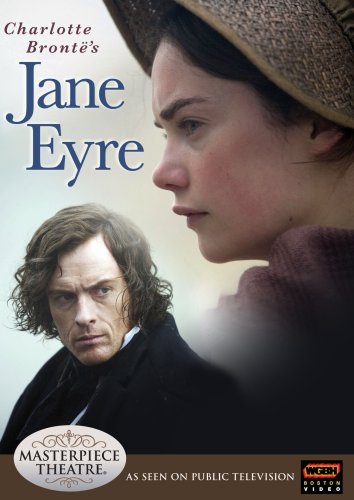
Movie Review: Jane Eyre

Jane Eyre


Recommended for: Ages 15 to Adult

Rating: NR (but, um, it's Jane Eyre. It's not a kids' story.)

After a wretched childhood, orphaned Jane Eyre yearns for new experiences. She accepts a governess position at Thornfield Hall, where she tutors a lively French girl named Adele. She soon finds herself falling in love with the brooding master of the house--the passionate Mr. Rochester. Jane gradually wins his heart, but they must overcome the dark secrets of the past before they can find happiness.

I've wanted to see this version of Jane Eyre ever since I read the book several years ago. The movie we saw just wasn't satisfactory, and while the old BBC one seemed promising, it went off Netflix before we finished. But this one, it's a good one. Friends had told me it was good, the librarian who checked it out for me said it was the best one she'd seen, and my mom had really liked it back when it was on PBS, when we were little and so not allowed to watch it. (Though I did manage to see spoilers then, and so the book wasn't as mysterious as I might have liked.) But this was very well done.

It's been years since I read the book, so I can't say exactly how closely it follows, but it seemed to me to be fairly faithful. They do condense a lot, particularly the beginning, but it was already four hours long (though Bleak House was eight...). It moved along at a good pace with no boring parts. Mr. Rochester's house party, which I thought dragged on too long in the book, was even well paced. I was also pleased that they didn't omit Jane's relationship to St. John Rivers and his sisters as the movie I watched did. That was important, don't cut it for time. I mean, really. There was a bit more to that section in the book, but there was a bit more to all the sections in the book. It's kind of to be expected. The book is better. The book has more in it. Now, they did tone down Mr. Rochester's disfiguration at the end. He just had a bit of a scar on his face and was blind. In the book, his face had been badly burned and one eye was permanently shut, plus the fact that he lost a hand. They also omitted the fact that after two years he got his sight somewhat back. But still, a pretty faithful adaptation.

As far as clean goes, Adele's past isn't exactly, but while it looks like it might go off into an inappropriate scene, it doesn't. There are a few kissing scenes I didn't appreciate, but it's easily solved by staring at the wall since I don't recall there being anything wrong with the dialogue. The big spoiler in the middle...Jane made the right decision, I'll leave it at that.

The settings are all so...perfect for the story. Charlotte Bronte was a master writer. The settings give the proper gloomy, dark, mysterious air to the story, and they captured it well onscreen.

These characters. I really like Jane. Poor mistreated girl. Unloved. Unwanted. Unattractive. You pity her, but she's not really the type who wants to be pitied. She makes her own way in life. And even when she falls in love, things can't go smoothly. Though I realized I have no idea why anyone would fall in love with a man like Mr. Rochester. He's rude, he's grumpy, and at times he's actually kind of scary. And it's not a Mr. Darcy proud kind of rude (though I don't understand why people love him so much either, I'd go more for characters like Gilbert Blythe, well, Teddy Kent, actually, or Kristoff), it's a dark, secretive, brooding rude. But he was the first person to treat Jane like an equal, like a real human being with feelings, so I suppose that's why. And I do like the ending, it's just...I still don't understand falling for dark, mysterious men like Mr. Rochester.

Jane Eyre. It's a classic story. It is well beloved. And this is an excellent screen adaptation of that story.

Monday, August 24, 2015

Book Reviews: Escape From Memory

Escape From Memory by Margaret Peterson Haddix


Recommended For: Ages 8 to Adult

Rating: PG (scary situations and intense images)

When Kira agrees to let her friends hypnotize her at a slumber party, she has no idea that she will reveal secrets even she didn't know she had - memories of fleeing a war-torn country with her mother, understanding a language she can't identify. Then her mother disappears, and a woman calling herself Aunt Memory takes Kira to Crythe, a place that doesn't officially exist, in order to rescue her mother - or so Kira thinks. She soon learns that there are memories locked in her mind that place her and her mother in grave danger, but those memories are also the only thing that might save them.
In Escape from Memory, award-winning author Margaret Peterson Haddix imagines a culture that values its memories above everything else - and a teen who has to make the most important decision of her life.

This book...was not what I was expecting. It was certainly interesting, and certain aspects of it reminded me of a character from the Ilyon Chronicles. Another noteworthy thing: I finally got my library card! Yay! I had to wait a while, but the wait is finally over, and I can start getting new books again.

Writing: 5/5
It was well-done. It immersed you into the head of the main character and portrayed her and her thoughts well. Descriptions weren't lacking, and the grammar and spelling was good as well.

Setting: 5/5
It was set in the Mid-West and a place...well, in California. The settings were realistic and interesting.

Plot: 5/5
The plot was very exciting. It had unexpected bits, and rounded off well. It was an intriguing plot.

Characters: 5/5
I really liked the characters in this book. They were well-rounded and interesting. The villain was well-done and had believable motives.

This book is another good one of Margaret Peterson Haddix's, and I certainly recommend it.

Monday, August 10, 2015

Book Review: Wolf Rider

Wolf Rider by Avi


Recommended For: Ages 12 to Adult

Rating: PG

The kitchen phone rings three times before Andy picks it up.
"Hello?" he says.
A voice replies, "I just killed someone."
From that moment, Andy Zadinski, a 15-year-old student at Madison High is plunged into terror of his own making. No one believes that the caller - "Zeke" as he names himself - was serious. When Andy reports what he's heard to the police, they dismiss Zeke as a Friday-night crank. And no one believes that Zeke's reputed victim, Nina, a pretty young woman attending the local college, is in danger. She refuses to believe it herself. Andy, says everyone, is crying "Wolf!" But Andy, whose experience with death has been close and hurtful, will do anything to protect Nina.
Pressured by the doubts of others, particularly his father, Andy is driven to prove the "wolf" real. Finding Zeke, however, is not enough. Andy must prove his existence to the doubters. To do so, he sets in motion a series of tension-filled events that can well lead him to the very catastrophe he is trying to avoid: Nina's death. For even as he and his father struggle to save each other from the consequences of Andy's actions, the man called Zeke begins to act on his own.
When the boy who cries "Wolf!" attempts to ride the beast, nothing can ever be the same.

This was a heavy read. What's crazy about it is that the phone call at the beginning of the book actually happened to the author just as it happened in the book. This is definitely the creepiest Avi book I've read, and it doesn't even have ghosts or anything like his some of his other ones do. This was my first book I read from my new library. I was so excited when I finally got my new library card! I'd been waiting for weeks.

Writing: 4.5/5
This book was written fairly well, Avi's books always are. The one complaint I had was I couldn't tell whether it was supposed to be an omniscient point of view or a deep third-person point of view. It seemed to be from Andy's point of view, and then it would say something that Andy wouldn't know because he had his eyes closed or something else like that. Probably something only a writer would notice. Other than that, the book was very well-written.

Setting: 5/5
There wasn't anything particularly spectacular about the setting. It was mostly in a college town. I got the impression it was in the eighties or nineties, however, this is never specified. For what it was, it seemed accurate and fairly vivid.

Plot: 5/5
Very interesting and intriguing. I certainly wasn't quite expecting the end the way it was. The plot was well-done and...creepy.

Character Development: 4.5/5
Not really spectacular, but not horrible either. Andy is well-developed and is given good motives for his persistence in believing what "Zeke" said on the phone call. Andy's dad was pretty well-developed, but "Zeke" could have used some more development and explanation into his past and motives and current state of mind and everything. Pretty well done, but not amazing.

This is a good book, though a little dark, and though I would recommend it, it's not for everybody.

Friday, August 7, 2015

Friday Favorites: The Princess Bride

The Princess Bride


Recommended For: Ages 8 to Adult

Rating: PG (for swashbuckling violence, some sensuality, and brief language.)

Fencing, fighting, torture, revenge, giants, monsters, chases, escapes, true love, miracles...The Princess Bride has got it all. Don't miss out on this hilarious classic that will have you laughing, crying, and cheering at the inconceivable end.

Oh, my goodness, this is such a good movie is a surprise everyone hasn't seen it. It's not a movie to be taken seriously, though. That'll take away all your enjoyment of it. It's just such a fun tongue-in-cheek movie with so many great quotable lines. If you see this movie, you'll either love it or you're wrong.

How do I start? The Princess Bride has so many facets to the story it's amazing. It's a comedy, a romance, an adventure, a revenge story, and so much more. And it's so enjoyable and unique. From the R.O.U.S.s to The Machine to Miracle Max to Prince Humperdinck, this story has things you won't see anywhere else.

The humor. Just. Wow. The movie's chock full of it. "True love is the best thing in the world. Except for a nice MLT. Mutton, lettuce, and tomato sandwich where the mutton is nice and lean and the tomato is ripe." "Thievery. You are trying to kidnap what I have rightfully stolen." "Common blunders. Most common of which is never get involved in a land war in Asia. But only slightly lesser known is never get involved with a Sicilian when death is on the line!" It's just hilarious to the nth degree.

The characters. Westley, the farm boy who loves Buttercup and goes out to seek his fortune, and who consequently gets killed by the Dread Pirate Roberts. Buttercup, the princess bride engaged to Prince Humperdinck. Fezzik, the lovable and friendly giant. Inigo Montoya, the fiery Spaniard bent on avenging his father's death. Vizzini, the clever and diabolical Sicilian who will do anything for money. Prince Humperdinck, who wants to start a war with Guilder so much that he'll kill his own wife to do it. Count Rugen, the evil man who loves causing people pain, and who invented The Machine to do so better than ever. And the mysterious Man in Black that follows them around. Can't forget him. He's actually very important.

The story. Well...It's kind of a satire, kind of serious, kind of comedic, and kind of something else. It's...well, inconceivable, as a matter of fact.

In short, this is a movie everyone should see at least once. Warning, it does have one bad word in it (that I always forget about until it happens in the movie) but under the circumstances, I can't blame the character at all for using it. So, I'm off to show The Princess Bride to a friend for the first time while watching it for the millionth time myself. It'll be awesome fun. And I expect you all to go watch it again as well. So goodbye, and have fun stormin' the castle!

Monday, August 3, 2015

Book Review: The Phantom Of the Opera

The Phantom of the Opera by Gaston Leroux


Recommended For: Ages 13 to Adult

Rating: PG (for scary situations and intense images)

An opera house in Paris is haunted by a mysterious and reportedly deformed "Opera Ghost". The new owners of the Opera choose not to believe the rumors, and in this, they make a grave mistake. For the Opera Ghost demands monthly payment and his other demands met...or grave trouble will ensue.
Meanwhile, chorus girl Christine Daae is getting singing lessons in her dressing room from the "Angel of Music" her father promised to send to her when he died. However, when old childhood friend and theater patron the Vicomte Raoul de Changy shows up and Christine pretends not to know him, he suspects something more behind the sinister Angel of Music.
No one suspects the truth behind the two personages, and the secret is one that could get many people killed. And their lives all hinge on the direction of the love of Miss Christine Daae.

I decided I don't really care if Morgan's already done a review of the book, if I can take a chance to rave about The Phantom of the Opera, I will.

I mean, wow. I had read the first quarter of the book and it wasn't really picking up, it wasn't really grabbing my interest, and then one day in the last week of Camp NaNoWriMo, I was scrolling through my Kindle carousel and my finger accidentally hit The Phantom of the Opera and it opened up. Instead of being a good author and putting the kindle down so I could catch up on my word count, I read the rest of the book that afternoon. And as a plus, I still caught up on my word count. So, all in all, I think it was a very good choice to make.

Writing: 4/5
This is an old book, originally written in French. Now, I don't really know what it is the French have with deformed men, but...at least I can say The Phantom of the Opera was clean, unlike most French things I've seen or heard about. For an old book, it's written very well. It's written as if it actually happened and the author did research and talked with some people to find out about and write down the story. This kind of writing detracted from the character development and majorly detracted from the climax, but over all, it was tastefully written with no boring over-descriptions.

Setting: 5/5
The setting is pretty simple: a 19th century opera house in France. Not that I know anything about 19th century French opera houses, but I do (sort of) know old-ish theaters, and from my knowledge of them, it seemed pretty accurate. I hear the opera house the story was set in is actually real, too, so the author could have gone to the actual location for research. And I would sincerely hope the book was historically accurate since it was written in the author's own time period and I don't believe the author was a time traveler.

Plot: 5/5
Well...I'm not really sure how to describe it. I gave my best effort in the description at the beginning of the post that I wrote myself since none of the descriptions I saw were very good ones. I...really liked it, but I don't know much to say about it other than I couldn't put it down. Because I couldn't (other than the time I made myself so I could write) and I was severely disappointed when I was nearing the end and it was time for dinner. But I managed to finish it soon enough. I mean, the plot was really good! I just don't seem to have the words to describe it. It left me speechless, I guess.

Character Development: 4/5
I've heard from multiple places that Raoul is a wimp in the book. Well, I am here to dispel these rumors! *cue epic superhero entrance* The main impression I got from Raoul was that he was confused and had no idea what was going on. And people that don't have a clue what's going on can't do much of anything no matter how much they want to, and Raoul obviously wanted to from love of Christine. Yes, he lost it in the torture chamber, but that doesn't make him a coward. I have several characters of my own who are very brave yet probably would have lost it in there as well. And from the Persian's narrative, you could tell he was struggling to keep his hold on reality as well as they were in there longer and longer. The only reason he didn't was that he knew how the torture chamber worked and he knew the Phantom and he had seen many people in the torture chamber before. And even he would have lost it if they had been in there much longer. There, now I'm done defending Raoul...I really wish the characters would have been better developed. But, considering the style it was written in (see above), they really couldn't be developed as much as I would have liked. But one of the good things about this was that pretty much all the characters got the same amount of development, except the Phantom, who got considerably more, and Christine, who seemed to get less. I really liked Raoul all the same, and the Persian was interesting (Raoul never could have done it without him). Christine seemed the same as in the play and movie adaptations I've seen, and the Phantom...I just don't know what to think of him.

In other words, if you've seen one of the movie adaptations and/or one of the performances on stage, read the book. It'll make a whole lot more sense, and you'll certainly enjoy it, even if you didn't like the songs in the play, because the book doesn't have the songs. And if you haven't watched it in any way, shape, or form, read the book anyways. This is one classic you don't want to miss!

Wednesday, June 24, 2015

Movie Review: Bleak House

Bleak House (2005)


Rating: NR

Recommended for: Ages 14 to Adult

Out of an interminable court case spin three young people each searching for their place in the world. Their story moves fast - swirling through an incredible array of characters from passionate young lovers to ruthless lawyers, form an ice-cold aristocratic beauty to a shrewd, relentless detective - until the final thrilling climax.

 So I guess I never did write that book review on Bleak House, but here I am for the miniseries! Eight hours of Dickensian awesomeness. Though it's hard to call Bleak House awesome, because even though it's SOOOO good, it's also super extremely sad and a lot of bad stuff happens. I love it. I really do like Dickens, and I think, however much I love Great Expectations, that Bleak House just may be my favorite.

Technical: 5/5

Can I just say fantabulous job all round? The people at the BBC know how to make a spectacular production. The adaptation was well done. While it isn't exactly the most quotable, it is so fantastically well-written and realistic. The acting was superb. I recognized nearly everyone from something else, but they were so good in these roles. The only ones I still had trouble watching because of other roles were Mr. Skimpole and Mrs. Chadband. And that's because I can't stand Agravaine and even dressed for that period and playing her role perfectly, Catherine Tate can't ever be anyone to me except Donna Noble. They were all so in character. They suited their roles perfectly and it was just amazing. Though it was fun to call them by other roles, like saying that Lady Dedlock has a plasmavore for a housekeeper, that Judy needed to go work in the morgue, or that Ada needed to be careful not to blink. And it kind of amused us that X-wing pilot Wedge Antilles made such a perfect Mr. Jarndyce. The costuming was superb and fit each character's personality. It's just so good. Every detail of production was handled in a way that made it all seem even more authentic.

Setting: 5/5

So perfect. Dickens wrote about the times in which he lived, drawing on his own personal experience for inspiration, so I think it's safe to assume the source material is historically accurate. And, while the settings aren't all exactly how I pictured them, they still fit perfectly. From Tom-All-Alones to Bleak House itself, every setting is so unique and real. That's probably one of the biggest things that struck me about this production. It's all so real. So well done that it doesn't feel like watching a movie, but more like witnessing real events.

Plot: 5/5

So, half the reason I really wanted to watch this was to understand it. See, I listened to the audiobook and it took me awhile to really pay attention to the parts that weren't Esther's narrative, so I was a bit lost on many points. This helped me to understand it. Yeah, they did change some things, like omitting Caddy Jellyby's wedding, the visit to Mr. Skimpole's family, not having Charley get smallpox first, SPOILER how they had Mr. Jarndyce propose to Esther face to face instead of in a letter, and having Lady Dedlock take off because Smallweed had showed up to tell Sir Leicester her secret rather than when she discovered she was a suspect in Tulkinghorn's murder END SPOILER, but it was still a very faithful adaptation. And my sister reminded me more than once that it was already eight hours long. They can't have everything. In true Dickens style, everyone turns out to be connected somehow, despite how complicated and individual each storyline at first appears to be. This story connects practically everything through the wretched case Jarndyce vs. Jarndyce in which no one can determine the actual will of the late John Jarndyce. Everyone sucked into the suit basically goes to ruin. It follows the stories of the wards in Jarndyce, Richard Carstone and Ada Clare, and Ada's companion Esther Summerson, Esther who is so sweet and kind that everyone loves her, including the rather creepy stalkerish Mr. Guppy. But I think I shall go into the character section of this review now.

Character Development: 5/5

Dickens has created some of the most memorable characters of all time. Many of them reside within the worthy classic Bleak House. My favorite is Esther. Of course. She's all the other characters' favorite. She's so kind. I also love Mr. Jarndyce. He's good and kind too, just such a great guy. Only my saying that would cause the wind to be in the east, likely. Ada is sweet too, and so pretty. Carey Mulligan did a fantastic job with her character. Despite his major responsibility issues, I actually like Richard. But at the same time, I want to slap him across the face and tell him to grow up, forget the Chauncery suit, and stick to an occupation so he can be the wonderful sort of man he he has the potential to be and the sort of husband Ada deserves. And I much like Allan Woodcourt. Who doesn't like a man who is super poor because he helps people without thought of pay? He doctors the dying street urchins just the same as he would the rich aristocracy, even though he knows full well they can never pay him. Then there are the other characters. Lady Dedlock is cold and distant, but we see in a certain situation that she does care for some people and that she is hiding a dark secret that must not be known. Mr. Guppy is, well, Mr. Guppy, sort of slimy, well intentioned, sort of, but quite creepy in his own way. Tulkinghorn is creepy in a scary way. You don't want to cross Mr. Tulkinghorn, or let him know your secrets. Harold Skimpole is so annoying. I know he is simple, "but a child," but he's so annoying. In a different way from Agravaine, but still. Smallweed..."Shake me up, Judy." Annoying, kind of gross (his teeth are yellow), this guy is memorably awful. "Judy, shake me up." There are so many more, like Caddy Jellyby, Prince Turveydrop and his father, Mrs. Rouncewell (once I discovered she was the plasmavore in Doctor Who, I couldn't help quoting "I even brought a straw" every time she came onscreen), Mr. George, Mr. Boythorn, Miss Flite, Mr. Krook, Charley, Jo, Mr. Vholes, Clamb, Inspector Bucket...There just isn't time to talk about them all, but they're all so vivid and quirky and unique.

Bleak House is certainly a Dickensian masterpiece and this production of it is true to all that it is. It's Dickens, so it's not exactly kid-friendly, but if you're in your mid to late teens or an adult, read it and watch it. It's super long, but it's worth it. SOOO worth it.

Note: This edition at least does split it up into the episodes in which it first aired, so it's really quite manageable.

Monday, June 1, 2015

Book Review: The Adventures of Sherlock Holmes

The Adventures of Sherlock Holmes by Sir Arthur Conan Doyle


Recommended For: Ages 12 and up

Rating: PG (for crime)

 A colonel receives five seeds in the mail...and dies within weeks. A young bride disappears immediately after her wedding. An old hat and a Christmas goose are the only clues to a stolen jewel. A son is accused of his father's murder.
 These mysteries-and many more-are brought to the house on Baker Street where detective Sherlock Holmes resides. No case is too tricky for the world's most famous sleuth and his incredible powers of deduction.

This book is a collection of some of the many short stories that Sir Arthur Conan Doyle wrote about Sherlock Holmes.

Writing 4/5

 This book was easier to pay attention to than many old books, and each mystery was interesting and had something unique. Each story is separate, which made it hard to get into the next story because there wasn't anything connecting them. At the end of the stories they would wrap up very quickly. I wished there was a little more with the conclusion of each one.

Setting: 5/5

 The stories are set in the 1800s in London and other places in England in the country. The settings seem like every other book about that time and place, so I assume that it is accurate. The stories do not occur in chronological order. Some of them happen when Watson is married and some of them happen before he was married

Plot: 4/5
 Each plot is different and one of them doesn't even appear to be a crime at first. None of them are really complicated, since each is only about thirty pages long. I'm not sure how realistic all of the mysteries are and that is why I gave it 4/5. For part of each story, there is the client's story which usually takes a good portion of each short story. 

Characters: 5/5

 There are two  main characters: Watson and Sherlock Holmes. Sherlock Holmes is a genius who can figure things out from small details. He is a little strange but he is and more caring and upset about crime than is portrayed in the BBC TV show. Watson is the main character and the stories are as if he wrote them down. They are all from his point of view and so you know his confusion at each mystery.

I think that Sherlock Holmes is probably the most realistic mystery series that I have read and I enjoyed reading each mystery. If you enjoy mysteries, then I would recommend that you read this and the first two Sherlock Holmes books.

Friday, March 20, 2015

Friday Favorites: Voices at Whisper Bend

Voices at Whisper Bend by Katherine Ayres


Recommended For: Ages 10 to Adult (interest and reading level)

Rating: PG (for frightening situations)

It's 1942. America has just entered World War II, and Charlotte Campbell's brother Jim has gone to fight. Twelve-year-old Charlotte wants to help the war effort too, so she and her classmates start a scrap metal drive. when all the metal is stolen, Charlotte is furious. Her determination to catch the thief leads her out on the rain-swollen river at night. There she discovers evidence she doesn't want to find-and there she faces the fear that haunts her.

I have a confession. There is a two-fold reason for this post. One, I need to post a favorite for this week, and my mind went blank. Two, Miss Jack Lewis Baillot is giving away three copies of her book Brothers-in-Arms that isn't out yet, so for the time being the only way to get the book is through the giveaway at her website here. I want to enter as many times as possible, so that means I have to post something about World War II and link it back to her blog. Which I have. So go enter, please (or don't so I have a better chance of winning :). After racking my brain for a favorite book of mine that is about World War II, I finally remembered this awesome book. And this will have to constitute all my entries, since I see no prospect of finishing The Rise and Fall of the Third Reich before the giveaway ends.

I bought this book with birthday money years and years ago. It came in a set of History Mysteries, but this was the one I loved the most, probably because it's set during World War II, and anything set during World War II is awesome. This book is really good. It's a well-done mystery, not unrealistic like many of the mysteries I've read, and it's about World War II. Which makes it a good book. 

Anyways. It's hard to put into words why this book is one of my favorites (other than it's set during World War II).

Can you tell I love World War II?

This book has great characters. I love Charlotte, the main character, her little brother Robbie, and I like Paul Rossi, too. And as a plus, Charlotte has an older brother, although he is absent fighting in the war. All the characters in this book are very well done. And the plot is very good as well. Which is probably why I like it so much.

And it's set during World War II.

So. I really like this book, and I think anyone who likes mysteries or World War II would, too.

And sorry for the awkward post, but I really like World War II.

Friday, March 13, 2015

Friday Favorites: The Secret Garden

The Secret Garden by Frances Hodgson Burnett


Rating: G

Recommended for: All Ages (read-aloud) or 8 to Adult (on own, for reading level)

What secrets lie behind the doors at Misselthwaite Manor? Recently arrived at her uncle's estate, orphaned Mary Lennox is spoiled, sickly, and certain she won't enjoy living there. Then she discovers the arched doorway into an overgrown garden, shut up since the death of her aunt ten years earlier. Mary soon begins transforming it into a thing of beauty--unaware that she is changing too. But Misselthwaite hides another secret, as Mary discovers one night. High in a dark room, away from the rest of the house, lies her young cousin, Colin, who believes he is an incurable invalid, destined to die young. His tantrums are so frightful, no one can reason with him. If only, Mary hopes, she can get Colin to love the secret garden as much as she does, its magic will work wonders on him.

Oh my goodness, where do I even start? I love this book so much. I first encountered it when my parents read it to my sister and me as a bedtime story, before our youngest sister had even begun to listen to chapter books with us. I believe it was recycled as a read-aloud when my sister was older. I have read it so many times myself. I know I read it when my dog was a puppy, because she tried to run off with it. I have loved trying (and likely failing miserably) to imitate the Yorkshire accents of Martha and Dickon and Ben Weatherstaff just as Mary did. I often used the word "wick" to describe green wood. My dream garden is one exactly like the Secret Garden. I (rather too loudly) quote Mary's "hysterical lump" speech which she yelled at Colin when he was freaking out and having a tantrum because he thought he was turning into a hunchback. I love the pictures of the outdoors, of being right there with Creation. It is so beautiful. The manor house is so dark. And it is so amazing.

Back in the days when The Secret Garden was written, protagonists of children's literature were always perfect little angels. Burnett's own A Little Princess and Little Lord Fauntleroy conform to that. A protagonist such as Mary Lennox definitely broke that mold. Honestly, she is a spoiled brat. She is sickly and cross. Her cousin Colin is even more sickly and cross, besides being a perfect little tyrant. But they do not remain so. They have simply beautiful character arcs. And then there's Dickon. The animal charmer, the boy who spends all his time on the moor. I always loved Dickon. Actually, I once named a character after him. Colin too.

The garden. There is such charm in a garden all locked away and overgrown, such beauty in transforming it by one's own hands. I still want a secret garden of my own. No garden will ever be satisfactory if not just like that one. Though with no Ben Weatherstaff of my own, it still wouldn't be the same.

There are mysteries about Misselthwaite Manor. It is such a large old house, so shut up, with so many things hidden. Like the crying. "There was someone crying. There was!" And old Mr. Craven, who is rarely at home. He is a strange person, with a hurtful past. Still the mention of hunchbacks makes me think of him. And of Colin.

The Secret Garden is such a well written book. The characters feel so real. The settings are so intriguing. The writing draws the reader in. Writing about it and flipping through my copy reminds me so much of my childhood and my love of this fantastic book. It is waiting for me. Misselthwaite Manor and the Secret Garden call.

Wednesday, February 4, 2015

Movie Review: Hugo

Hugo


Recommended for: Ages 8 to Adult

Rating: PG

Martin Scorsese's adaptation of Brian Selznick's award-winning novel The Invention of Hugo Cabret stars Asa Butterfield as an orphan boy who lives in a Parisian train station. Sent to live with his drunken uncle after his father's death in a fire, Hugo learned how to wind the massive clocks that run throughout the station. When the uncle disappears one day, Hugo decides to maintain the clocks on his own, hoping nobody will catch on to him squatting in the station.

His natural aptitude for engineering leads him to steal gears, tools, and other items from a toy-shop owner who maintains a storefront in the station. Hugo needs these purloined pieces in order to rebuild a mechanical man that was left in the father's care at the museum -- the restoration was a project father and son did together.

When Georges, the old man who runs the toy stand, catches on to the thievery, he threatens to turn Hugo over to the station's lone police officer, who makes every effort to send any parentless child in the station to the orphanage. But Hugo's run-in with Georges leads to a friendship with the elderly gentleman's goddaughter, Isabelle, who unknowingly possesses the last item Hugo needs to make the mechanical man work again.

I knew basically nothing about Hugo before watching it, other than that I knew people who liked it. Oh, and that Howard Shore did the music. So I had no expectations, and no idea where the story would go. It easily blew me away. Hugo is a really good movie.

Technical: 5/5

Hugo is a well made movie. It's definitely not a film that was made on a small budget, or with untalented people in any area. Everything, from the writing to the design to the acting to the editing to the music (after all, it was Howard Shore) was very well done.

Setting: 5/5

Much of Hugo takes place in a train station in Paris. I can't remember if they ever said the exact year, but it's sometime past WWI, but when parents could still easily remember the earliest films. The atmosphere of the train station was certainly interesting and seemed authentic, though I can't personally verify it, never having been in a Paris train station in the 20s or 30s. :) The structure of the clocks where Hugo lives was really cool, and something I'd never really thought about before. Someone had to wind the clocks back in the old days, and they had to reach them somehow. It was really cool.

Plot: 5/5

Hugo is a children's movie, but that doesn't keep it from having a complex and involved plot. I honestly had no idea where it was going, at any point. It took me awhile to understand what was going on, but once I started to understand, I was more than interested in what would happen. What's cool is that certain things (I won't say what for spoilers) are taken from real history. There were many twists and turns throughout the story that left me guessing where it was going to go next. I was definitely interested in Hugo and Isabelle's personal stories as well as the revelation of the mystery they were pursuing. It was amazing.

Character Development: 4.5/5

The characters weren't quite top notch favorite fictional character quality, but they were extremely well-developed nonetheless. I cared about Hugo and Isabelle and was anxious to see things turn out well for them, Hugo particularly since he had some extreme hardships he was going through. Isabelle had a good life with her godparents, though there were things she did not know. The side characters added character to the story, such as the lady with the dog, and the police officer. And Papa Georges and Mama Jeanne were both unique fully developed people who fulfilled their role in the story well.

Hugo supposedly didn't make much money, but I don't know why. It is an excellent movie which I highly recommend.

Wednesday, January 28, 2015

TV Show Review: Sherlock

Sherlock

Recommended for: Ages 14 and up

Rating: TV-14 (For crime scenes and suggestive situations)

1. A Study in Pink

A woman in pink lies dead in a derelict house. She is the fourth in a series of seemingly impossible suicides. DI Lestrade is the best Scotland Yard has got, but even he knows that there's only one man who can help. Elsewhere in London, a war hero, invalided home from Afghanistan, meets a strange but charismatic genius who is looking for a flatmate; Dr John Watson and Sherlock Holmes are meeting for the first time. 

I am doing a review on a TV show because we haven't been watching any movies.

Technical 4/5

The special effects and the acting are all done very well, though sometimes the injuries can be a little graphic. Most of the time the story is told very well. It can be a little confusing at times but usually everything is explained and tied together some how. There are also some parts that I think are supposed to be sad but they don't really seem all that sad.

Setting 5/5

The setting is very different from the books, since they modernized it for the TV show. There were some locations in The Hound of the Baskervilles that I thought were faithful to the book, even though the plot was not. For most of the show, they are in modern day London. Sherlock does still live in 221b Baker St. which is a mess. There really isn't much to say about the settings but that they are good.

Plot 4/5

I have only read three of the books but the ones that are based off the books that I have read only had a couple of elements from the books. The plots can get confusing but they will usually connect. Also if there was a previous scene that had something important in it , they will usually play the important part again. The show is about Sherlock solving crimes in which there is usually a murder involved. There is one episode that does not start out with a crime.

Characters 4/5

Watson is still my favorite character but he was a better man in the books. The Watson in the show does act a lot like young Bilbo. Sherlock is very smart and weird and he picks up little details and remembers them. He can also be rude sometimes. I'm not happy that he doesn't play the violin in the same position as in the books. Sherlock is a pretty well developed character, although he does act a lot like the eleventh doctor, especially in season 1. There are some minor characters who I recognize from another BBC shows.

Even though I don't like all of the things that are changed from the books, which I think are  better, I still enjoy the show and I am looking forward to the next season.

Monday, January 26, 2015

Book Reviews: The Insider

Kingdom Keepers: The Insider by Ridley Pearson


Recommended For: Ages 10 and Up

Rating: PG for violence

The Kingdom Keepers' senior year in high school is almost over. For more than three years, things have been quiet. Their battles are long behind them, they agree, the threat to the Disney realm silenced albeit at great cost. But inside the catacombs of the Aztec temple where Finn Whitman faced down his nemesis, the monstrous Chernabog, a new threat brews.

Deception and betrayal rock the Kingdom Keepers as the merciless group of Disney villains known as the Overtakers stage an unexpected comeback. But a discovery by the Keepers provides them with one hope of victory-a lost icon. It was believed to be gone forever. The Keepers have one last chance to preserve the heart of the Kingdom-Disneyland-from a terrifying destruction decades in the making. 

I devoured the books before this one in the series. They were really good. So I was highly anticipating the next one. However, when I picked it up, I had a few big disappointments in for me.

Writing: 3.7/5
The first disappointment was that the book was in present tense. Given that the first six books in the series were in past tense and that the excerpt on the back of the book was also in past tense, this threw me off more than a little. I spent a fourth of the book trying to get used to it, way more than I should have. Don't get me wrong, I'm not against present tense, when it is in the right place and well-done. For instance, in the Hunger Games trilogy, Suzanne Collins pulls off present tense extremely well (probably because she was a screenwriter before she became an author). I forgot The Hunger Games was in present tense within the first few pages. The Insider, however, took me a fourth of the book or longer. What's more, the sentences weren't very cohesive, were choppy, and didn't seem to fit together at times. This may be due to the fact that Ridley Pearson crowd-sourced the writing of this book, something he really shouldn't have done at all. The first half of the book felt choppy and awkward, especially the beginning. And where Ridley Pearson credited the parts where random strangers wrote their parts of the book according to Ridley's outline: I'm sorry, I understand that he wanted to give them credit for their (unnecessary and uncalled-for) work, but it was just too distracting, especially when I was having a hard time getting into the story in the first place. This got better as I went on, but it never got as good as the others, especially the first four.

Setting: 5/5
Although I'm hesitant to give anything in this book 5 out of 5, there was nothing bad about the setting of this book. Not that I would know. Disney freak that I am, I know next to nothing about Disneyland, and even less about California itself. But it seemed real to me, and from what I could tell from my very limited knowledge, accurate. This may be one of the only things Ridley Pearson did five stars on in this book.

Plot: 4/5
I enjoyed the second half of this book, although not as much as I enjoyed the others. The plot in that part seemed pretty well done. But in the first half, and especially more towards the beginning...I don't know. I'm not exactly sure how to describe it, but...it didn't fit well together. It was awkward. It felt a little contrived and unrealistic. It felt like Ridley Pearson was striving for imaginative straws on what was going on.  An appearance of an important character that may or may not have been a betrayal was never explained. And at the end, when there was a way more than subtle hint that the series would go on, I didn't feel excited, intrigued, or annoyed at not getting more. I wanted to bash Ridley Pearson's head with the book for trying to drag this series out more (undoubtedly for more money; I can't think of any other conceivable reason why he would want to drag this tired series out more when obviously it's begging to be finished). And I felt tired. Tired of the series, tired of his inability to make the characters change, tired of his growing head with his fame (or something; it's not the same as it was at the beginning). The rest of my explanation of why I didn't enjoy this installment so much goes in the character development section.

Characters: 3.65/5
One thing I do have to say for this series is the characters haven't changed. No one can complain about them "not being the same characters as they were in the beginning". But that is the whole point of a story. No story is good, or at least good enough, if the characters don't change. Events change people. Especially events of the type that are in this series. I mean, for example, one of Finn's friends gets killed accidentally by Finn and Finn feels responsible and blames himself. But Ridley Pearson doesn't really show this. He doesn't let the reader feel Finn's remorse and guilt. I know this isn't impossible, or even extremely hard. One of my favorite authors, Jaye L. Knight, or as she was previously known, Molly Evangeline, does an extremely good job of this. Her character Jace has a ton of remorse and you feel it a lot. I myself am putting my own character's regrets (huge ones, I might add) into not the dialogue, but the narrative via character voice. It would've been easy for Ridley Pearson to put this in. *cue sarcastic voice* I know, I know, it probably wouldn't have fit in with the crowd-sourcing. *end sarcastic voice* But seriously, Ridley Pearson should have written the book himself instead of giving it to strangers that probably haven't read all of the books. I already knew that he couldn't show what the characters were physically feeling very well (I had to use my imagination to a very great extent when it said "pain"), but I thought he was good at internal feelings (and he's pretty good about a quarter to half-way through). A bigger issue I have with it is the romance. Not the presence of it, the lack of it (this'll shock my sister. She still hasn't gotten over the fact that I skipped the wedding vows in Trust ). I mean seriously, Finn has been showing interest in Amanda since before the first book! Which, I might add was five years ago! They should be past this do-I-say-something-do-I-not-say-something hesitant stage. The other sort-of romances with the side characters (I hesitate to call them romances when they are so under-developed as they are) even go farther, even though emotionally they are pretty much the same (as in, non-existent), and all the side characters do is mime "I love you". But Finn and Amanda don't go past the holding-hands and not saying anything even slightly romantic past "You're a good friend" and reluctance to be parted because heck, they could get killed. Seriously, they're eighteen, they've graduated, they can be romantic!!!

All that being said, I still enjoyed the second half of the book, and the (FINALLY) appearance of MICKEY MOUSE!!! *happy dance* Although I was disappointed that he couldn't speak except through other characters (e.g., Violet from The Incredibles). To anyone who has read the rest of the books in this series, I recommend reading this book. Push through to the good parts. I know you can, especially if you've read Lord of the Rings. And you should. The ending really is spectacular (sort of. As spectacular as it could be). And to anyone who hasn't read the rest of the Kingdom Keepers series, either go and read the rest of the series first, or just don't bother. You can't read this book on its own.