Showing posts with label period drama. Show all posts

Monday, November 2, 2015

Book Review: The Scarlet Pimpernel

Sorry for the lack of posts last week. I...really don't have a good excuse. But we're back!

The Scarlet Pimpernel by Baroness Emmuska Orczy


Recommended for: Ages 12 to Adult (reading level, mild romance, action violence)

In the year 1792, Sir Percy and Lady Marguerite Blakeney are the darlings of British society—he is known as one of the wealthiest men in England and a dimwit; she is French, a stunning former actress, and the cleverest woman in Europe—and they find themselves at the center of a deadly political intrigue. The Reign of Terror controls France, and every day aristocrats in Paris fall victim to Madame la Guillotine. Only one man can rescue them—the Scarlet Pimpernel—a master of disguises who leaves a calling card bearing only a signature red flower. As the fascinating connection between the Blakeneys and this mysterious hero is revealed, they are forced to choose between love and loyalty in order to avoid the French agent Chauvelin, who relentlessly hunts the Scarlet Pimpernel.
 
My friends, especially my friend Ashley, told me that I had to read this book. I downloaded it to my kindle, and didn't really read it. Ashely kept getting onto me about reading it, and I would just be like, "yeah, I'm going to." I'd read a few chapters when I was half asleep and gotten completely lost on it, and I just kind of didn't care. I kept thinking I probably needed to just start over, but I had other things to read.

When Masked, a modernized webseries adaptation of The Scarlet Pimpernel, began, I started to think about this story again. After all, my friends wouldn't really let me avoid it. I watched the first episode. I hadn't really intended to, I wanted to read the book first, but Ashley posted it on her blog and so I went ahead and watched it. I didn't really know what to expect, and I can't say it really piqued my interest, but I saw the hype over this book. And perhaps got a bit of a spoiler, but I'm not mad.

After I listened to Little Dorrit, I found myself with a bit of a book hangover, and I didn't want to listen to anything else. But I had more sewing to do and my friends had been on me about this book for so long that I just said to myself, "fine, I'll listen to The Scarlet Pimpernel" and turned it on on Spotify.

I'm not sure when I realized "this is a really good book!" but it was long before that moment when it was at least half past midnight and I was telling myself I needed to put aside the sewing projects for the night, turn off the audio book, and not pick up my kindle to continue so I could actually go to sleep. It's just SOOOOO good. Even though my sewing project was very difficult, I wanted to work on it every possible moment because I just had to listen to more of The Scarlet Pimpernel.

I was told to just file away the information in the first few chapters and wait for Sir Percy to show up. It's when Sir Percy shows up that things really get going, before that it's admittedly a bit boring, but after? Oh my goodness, there's no putting that book down! The farther along the book gets, the more exciting it is, the more intense, the more nerve-wracking. I just had to know what would happen, if Marguerite would be able to avert the consequences of her desperate actions, or if her decisions would lead to the most horrendous outcome. 
 
It's clean, too. There is a romantic aspect to it, and there is a point where Marguerite really wants Percy to kiss her, but (1) they're married, and (2) this was written at the end of the Victorian era so it's still handled in a pretty clean way.

This book also made me think. At a time when miscommunications between people I know in real life were potentially hurtling things towards a very bad conclusion (thankfully averted), the fact that a little communication would have prevented the events of The Scarlet Pimpernel entirely really stuck out to me. So many things go wrong because people fail to communicate. It can destroy so much. Marguerite should have communicated with her husband, Sir Percy. They both loved each other so much, yet they were driven apart by a lack of vital communication.

I love the characters. I don't want to say which character I love so much because spoilers, but suffice it to say that I dreamed I was meeting him and having a really hard time not fangirling. In my dream. He's so brilliant and selfless and brave. And the forerunner of secret identity superheroes. How can it get any better than that? I also love Marguerite, of course. Sure, she's a character I want to tell what to do, but I still love her. And she turned out to be really brave too. Though she made a grievous mistake in trying to save her brother whom she loves so much, she does all she can to right it.

And the ending! So many twists. So much brilliancy. Such a perfect conclusion. But couldn't it have gone on forever? 

In short, The Scarlet Pimpernel is one of the best, most exciting classics I've ever read or listened to. Perhaps I used to be confused as to why so many of my friends love this book so much, but now I'm up there with the biggest fans among them. Highly recommended.

Monday, October 12, 2015

Book Review: Little Dorrit

Little Dorrit by Charles Dickens


Recommended for: Ages 13 to Adult (reading and interest level, mostly)

A novel of serendipity, of fortunes won and lost, and of the spectre of imprisonment that hangs over all aspects of Victorian society

When Arthur Clennam returns to England after many years abroad, he takes a kindly interest in Amy Dorrit, his mother's seamstress, and in the affairs of Amy's father, William Dorrit, a man of shabby grandeur, long imprisoned for debt in Marshalsea prison. As Arthur soon discovers, the dark shadow of the prison stretches far beyond its walls to affect the lives of many, from the kindly Mr Panks, the reluctant rent-collector of Bleeding Heart Yard, and the tipsily garrulous Flora Finching, to Merdle, an unscrupulous financier, and the bureaucratic Barnacles in the Circumlocution Office. A masterly evocation of the state and psychology of imprisonment,
Little Dorrit is one of the supreme works of Dickens's maturity. 
 
I'll just admit upfront, the main reason I chose Little Dorrit was because of the cast of the newest miniseries, primarily Arthur Darvill, Freema Agyeman, and Andy Serkis. I did know already that I love Dickens, so that was one factor in choosing to listen to this while sewing, if smaller than the cast influence. However, I was not prepared to love it as much as I do. It is my favorite Dickens book so far, it is just that good. I love it, and I can't wait to see the miniseries. I hear it's excellent.

Writing: 5/5

Dickens is a master of the English language. Sure, it's a little difficult to understand at times, but I guess people used to be smarter. But still, it really did pull me into the story. I was in the Marshalsea. I was with Arthur Clennam. I experienced what Amy Dorrit experienced. And I gotta say, I got really mad at the Dorrits when they were belittling Arthur. How dare they! But that's how invested Dickens made me in this story. Plus I loved the way the parts where Arthur was determined not to fall in love with Pet Meagles were written. It made me laugh.

Setting: 5/5

Dickens wrote about the world in which he lived, so I assume it was historically accurate. Little Dorrit focuses on debtor's prison, specifically the Marshalsea prison. It's rather different from what I expected out of a prison, it's not just a bunch of cells. They actually have rooms they stay in, and they have lots of visitors, it's just the actual prisoners of the Marshalsea obviously can't leave, and they do have a certain time every day when they lock the gates so no one can come in or out. As far as the settings outside of the Marshalsea go, they're pretty much the same as any other Victorian novel. I do quite love it.

Plot: 5/5

Dickens is a master. The plot is so complex, so many different storylines that come together in the end. I admit, I'm still a little confused about the ending, but, well, I'm confused about the ending of every Dickens book. Little Dorrit is a lot easier to follow than Bleak House, though. The story follows the Dorrit family and Arthur Clennam, primarily, but there are also plotlines involving characters such as Henry Gowan, the Meagles family, Miss Wade, etc. And there's Blandois, or Rigaud, whichever name he's using at the time. I don't want to spoil the twists and turns, but there are so many, and it certainly kept me interested. Be prepared for suicide and blackmail and secrets brought to light.

Character Development: 5/5

Arthur and Amy are my favorites. Arthur's my favorite Dickens guy character for sure. He's not as irresponsible as Pip Pirrip, nor as ridiculously immature as Richard Carstone. I still like him better than John Jarndyce and Allan Woodcourt, and there's no comparison whatsoever to Ebeneezer Scrooge. He's one of my favorite characters from the classics, yes, I like him far better than Mr. Darcy. He ranks below Sir Percy, though. Arthur is pretty awesome. He's so good and kind and thoughtful. He's so helpful and so determined to make things right. He'd far rather take the blame for poor business decisions than let his partner have anything at all to do with it. And I like his name too. Amy, better known as Little Dorrit, is also very sweet and kind. I love her very much as well, and I feel sorry for her for having to deal with her family, though she never complains and always thinks the best of them. I have to admit, I was rather disappointed that her brother Tip is such a jerk loser. I can't bear to think of Rory Williams being such a guy. As is the case with all of Dickens' books, Little Dorrit is full of colorful characters. Affery Flintwinch, who's always having strange "dreams" who is so scared. Jeremiah, her husband, who is kind of scary. Mrs. Clennam who hasn't left her room in 15 years. John Chivery who is always composing a new epitaph for his tombstone (Alonzo from Doctor Who!). Spoiled Pet Meagles. Mentally handicapped Maggy. Talkative Flora Finching. Father of the Marshalsea William Dorrit. There are so many, all so unique.

Read Little Dorrit. Just do it. It's my favorite Dickens so far because it's just. so. good. You must meet Arthur Clennam and Amy Dorrit. Learn about debtor's prison. And prepare yourself for an intricate, amazing story by one of the best classic authors ever.

Wednesday, September 2, 2015

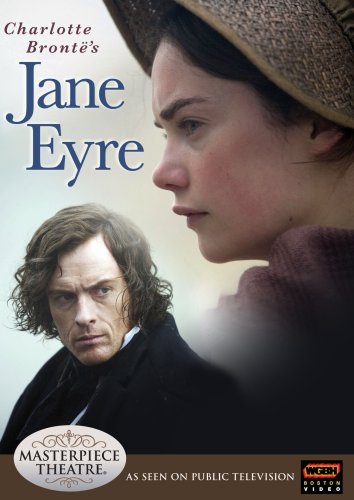
Movie Review: Jane Eyre

Jane Eyre


Recommended for: Ages 15 to Adult

Rating: NR (but, um, it's Jane Eyre. It's not a kids' story.)

After a wretched childhood, orphaned Jane Eyre yearns for new experiences. She accepts a governess position at Thornfield Hall, where she tutors a lively French girl named Adele. She soon finds herself falling in love with the brooding master of the house--the passionate Mr. Rochester. Jane gradually wins his heart, but they must overcome the dark secrets of the past before they can find happiness.

I've wanted to see this version of Jane Eyre ever since I read the book several years ago. The movie we saw just wasn't satisfactory, and while the old BBC one seemed promising, it went off Netflix before we finished. But this one, it's a good one. Friends had told me it was good, the librarian who checked it out for me said it was the best one she'd seen, and my mom had really liked it back when it was on PBS, when we were little and so not allowed to watch it. (Though I did manage to see spoilers then, and so the book wasn't as mysterious as I might have liked.) But this was very well done.

It's been years since I read the book, so I can't say exactly how closely it follows, but it seemed to me to be fairly faithful. They do condense a lot, particularly the beginning, but it was already four hours long (though Bleak House was eight...). It moved along at a good pace with no boring parts. Mr. Rochester's house party, which I thought dragged on too long in the book, was even well paced. I was also pleased that they didn't omit Jane's relationship to St. John Rivers and his sisters as the movie I watched did. That was important, don't cut it for time. I mean, really. There was a bit more to that section in the book, but there was a bit more to all the sections in the book. It's kind of to be expected. The book is better. The book has more in it. Now, they did tone down Mr. Rochester's disfiguration at the end. He just had a bit of a scar on his face and was blind. In the book, his face had been badly burned and one eye was permanently shut, plus the fact that he lost a hand. They also omitted the fact that after two years he got his sight somewhat back. But still, a pretty faithful adaptation.

As far as clean goes, Adele's past isn't exactly, but while it looks like it might go off into an inappropriate scene, it doesn't. There are a few kissing scenes I didn't appreciate, but it's easily solved by staring at the wall since I don't recall there being anything wrong with the dialogue. The big spoiler in the middle...Jane made the right decision, I'll leave it at that.

The settings are all so...perfect for the story. Charlotte Bronte was a master writer. The settings give the proper gloomy, dark, mysterious air to the story, and they captured it well onscreen.

These characters. I really like Jane. Poor mistreated girl. Unloved. Unwanted. Unattractive. You pity her, but she's not really the type who wants to be pitied. She makes her own way in life. And even when she falls in love, things can't go smoothly. Though I realized I have no idea why anyone would fall in love with a man like Mr. Rochester. He's rude, he's grumpy, and at times he's actually kind of scary. And it's not a Mr. Darcy proud kind of rude (though I don't understand why people love him so much either, I'd go more for characters like Gilbert Blythe, well, Teddy Kent, actually, or Kristoff), it's a dark, secretive, brooding rude. But he was the first person to treat Jane like an equal, like a real human being with feelings, so I suppose that's why. And I do like the ending, it's just...I still don't understand falling for dark, mysterious men like Mr. Rochester.

Jane Eyre. It's a classic story. It is well beloved. And this is an excellent screen adaptation of that story.

Friday, August 14, 2015

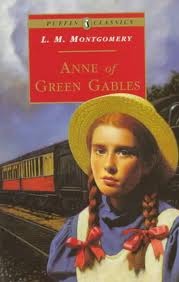
Friday Favorites: Anne of Green Gables

Anne of Green Gables by L. M. Montgomery


Recommended for: All Ages (as a read-aloud, 10 and up on own for reading level)

Rating: G

As soon as Anne Shirley arrived at the snug, white farmhouse called Green Gables, she knew she  wanted to stay forever... but would the Cuthberts  send her back to the orphanage? Anne knows she's not  what they expected -- a skinny girl with decidedly  red hair and a temper to match. If only she could  convince them to let her stay, she'd try very hard  not to keep rushing headlong into scrapes or blurt  out the very first thing she had to say. Anne was  not like anybody else, everyone at Green Gables  agreed; she was special -- a girl with an enormous  imagination. This orphan girl dreamed of the day  when she could call herself Anne of Green Gables.

I don't think I've talked about Anne here on Shire Reviews yet, though I know I have over on my author blog. And that is somewhat of a shame, since Anne is more than worth talking about, but at least that means I get to talk about her now.

Anne of Green Gables. I don't remember how old I was when my mom first read it to me, but I do remember things from it, primarily how much I hated the part where SPOILER Matthew dies. END SPOILER That was only the first of many times I experienced this wonderful story. It never gets old. 
 
Anne is an orphan. She wants a family, she wants raven black hair, and a bosom friend. When she finds out she is to be adopted, it seems too good to be true. And, in a way, it sort of is. Marilla and Matthew Cuthbert intended to adopt a boy, but they got Anne instead. Though at first they didn't want to keep her, soon they can't imagine life without her. Anne is very talkative, highly imaginative, and makes LOTS of mistakes. Like the time she accidentally set Diana drunk. Or when she dyed her hair green. And there's the time she fell off the Barrys' ridgepole. Life is never dull with Anne around.

L. M. Montgomery is such an excellent writer. Her choice of words is simply exquisite. Her descriptions are so vivid. The characters are well drawn and very memorable. Her books are full of heart, and just too fantastic for words. The entire Anne series is amazing, all eight books. I love and recommend them all.

I can't finish this without mentioning Anne's relationship with Gilbert Blythe. From the start, Gilbert liked Anne, but he went about getting her attention quite the wrong way. By calling her "carrots" he caused her to not only break her slate over his head, but to refuse to speak to him for five years. Yes, Mr. Philips played a part in causing that as well, but five years. And then she became good friends with him, instead of just good rivals. Gil had tried to make amends, but Anne was just too stubborn. And too stubborn to realized she loved him until he nearly died of typhoid fever towards the end of Anne of the Island. Of course, since that's only book 3 of an 8 book series, there's much more to their story after that. In fact, the protagonist of Rilla of Ingleside is their youngest daughter.

I do love these books so much. They are true classics, just as beloved now as they were when they first came out a hundred years ago. Anne is relatable. She is a character from whom one can learn both what to do and what not to do. Her story is timeless. It is both fun and heartbreaking. It is a story well worth reading, and one you will find yourself reading again and again.

Speaking of, I still need to find time to finish listening to my Anne of Green Gables audio drama...

Friday, July 17, 2015

Friday Favorites: Thursday's Child

Thursday's Child by Noel Streatfeild


Recommended for: All Ages, lovers of orphan stories

Rating: G

Never in the entire history of St. Luke's Orphanage had any child dared even to think about running away. But that was before the arrival of Margaret Thursday, who was not at all an ordinary orphan--as she was always the first to point out.

Headstrong and proud, Margaret refused from the start to be frightened by the harsh punishments and threats of Matron, the cruel director of St. Luke's, who bullied the children as though they were to blame for being orphans. And when life at St. Luke's no longer seemed bearable, it was Margaret who instigated the plan by which she and her two friends, Peter and Horatio Beresford, made their nighttime escape.

This proved to be the start of an exciting and unpredictable journey. England at the turn of the century comes vividly to life, as the reader meets a variety of colorful characters--from the rugged, hard-working canal boat people, to the eccentric cast of a traveling theatrical company, and the polite and proper society of the Earl and Countess of Corkberry. But the end of the story we know tat, just as the old rhyme says, Thursday's child has far to go, and we are confident that this particular Thursday's child is sure to reach her destination.

I've always loved orphan stories. Something about that nature of hard luck story, the hardships they endure, the adventure of running away, the "rags to riches" of some nature that so often follows, just grabs my imagination. Thursday's Child by Noel Streatfeild claims the title of my favorite orphan story. It has everything one could wish for in such a story: a spunky protagonist, intriguing secondary characters, a cruel orphanage Matron, a harsh environment including little food and too much work, a kind benefactor, a daring escape...

St. Luke's Orphanage is just terrible, and so are all the people who work there, someone even purposely puts soap in Horry Beresford's eyes every morning. But it is the place that brings together Margaret and the Beresfords. Margaret is spunky and headstrong, rather proud because her mother left her on the church steps with two of everything, all of the finest quality. She is stubborn, but also caring and has a strong sense of justice. Peter Beresford is quieter, quite the reader. It is because of him I chose Bleak House to keep me company on the long drives to and from orchestra rehearsal last semester. He's sweet, but all wrapped up in his imagination, which, I believe, makes me identify with him. He even manages to read while cutting the grass. And doesn't he look like the Tiny Tim in Scrooge with Albert Finney on this cover? Horry is the little one, the one who lets their true conditions slip, a large part of the reason the escape is enacted. There is also Lavinia, Peter and Horry's older sister, who works as hard as she can to earn money to support her little brothers, but unfortunately, she is not fast enough.

In true Noel Streatfeild style, everything circulates back to the stage somehow. Margaret Thursday has acting talent in her little finger. Perhaps her attitude has something to do with it. But it is largely this book that got me to read Little Lord Fauntleroy by Frances Hodgson Burnett. Because the ending is all wrapped up in it. And there is more spoilery material to the ending that I oughtn't to divulge. It is very good. I love this book. (As a side note, this book reinforces my belief that home hair dying experiences always turn out green. :P )

If you like orphan stories, if you like stories about the stage, if you like hard luck stories, or rags to riches, read Thursday's Child. It will not disappoint. There is also a sequel entitled Far to Go, which I have yet to get a hold of.

Wednesday, June 24, 2015

Movie Review: Bleak House

Bleak House (2005)


Rating: NR

Recommended for: Ages 14 to Adult

Out of an interminable court case spin three young people each searching for their place in the world. Their story moves fast - swirling through an incredible array of characters from passionate young lovers to ruthless lawyers, form an ice-cold aristocratic beauty to a shrewd, relentless detective - until the final thrilling climax.

 So I guess I never did write that book review on Bleak House, but here I am for the miniseries! Eight hours of Dickensian awesomeness. Though it's hard to call Bleak House awesome, because even though it's SOOOO good, it's also super extremely sad and a lot of bad stuff happens. I love it. I really do like Dickens, and I think, however much I love Great Expectations, that Bleak House just may be my favorite.

Technical: 5/5

Can I just say fantabulous job all round? The people at the BBC know how to make a spectacular production. The adaptation was well done. While it isn't exactly the most quotable, it is so fantastically well-written and realistic. The acting was superb. I recognized nearly everyone from something else, but they were so good in these roles. The only ones I still had trouble watching because of other roles were Mr. Skimpole and Mrs. Chadband. And that's because I can't stand Agravaine and even dressed for that period and playing her role perfectly, Catherine Tate can't ever be anyone to me except Donna Noble. They were all so in character. They suited their roles perfectly and it was just amazing. Though it was fun to call them by other roles, like saying that Lady Dedlock has a plasmavore for a housekeeper, that Judy needed to go work in the morgue, or that Ada needed to be careful not to blink. And it kind of amused us that X-wing pilot Wedge Antilles made such a perfect Mr. Jarndyce. The costuming was superb and fit each character's personality. It's just so good. Every detail of production was handled in a way that made it all seem even more authentic.

Setting: 5/5

So perfect. Dickens wrote about the times in which he lived, drawing on his own personal experience for inspiration, so I think it's safe to assume the source material is historically accurate. And, while the settings aren't all exactly how I pictured them, they still fit perfectly. From Tom-All-Alones to Bleak House itself, every setting is so unique and real. That's probably one of the biggest things that struck me about this production. It's all so real. So well done that it doesn't feel like watching a movie, but more like witnessing real events.

Plot: 5/5

So, half the reason I really wanted to watch this was to understand it. See, I listened to the audiobook and it took me awhile to really pay attention to the parts that weren't Esther's narrative, so I was a bit lost on many points. This helped me to understand it. Yeah, they did change some things, like omitting Caddy Jellyby's wedding, the visit to Mr. Skimpole's family, not having Charley get smallpox first, SPOILER how they had Mr. Jarndyce propose to Esther face to face instead of in a letter, and having Lady Dedlock take off because Smallweed had showed up to tell Sir Leicester her secret rather than when she discovered she was a suspect in Tulkinghorn's murder END SPOILER, but it was still a very faithful adaptation. And my sister reminded me more than once that it was already eight hours long. They can't have everything. In true Dickens style, everyone turns out to be connected somehow, despite how complicated and individual each storyline at first appears to be. This story connects practically everything through the wretched case Jarndyce vs. Jarndyce in which no one can determine the actual will of the late John Jarndyce. Everyone sucked into the suit basically goes to ruin. It follows the stories of the wards in Jarndyce, Richard Carstone and Ada Clare, and Ada's companion Esther Summerson, Esther who is so sweet and kind that everyone loves her, including the rather creepy stalkerish Mr. Guppy. But I think I shall go into the character section of this review now.

Character Development: 5/5

Dickens has created some of the most memorable characters of all time. Many of them reside within the worthy classic Bleak House. My favorite is Esther. Of course. She's all the other characters' favorite. She's so kind. I also love Mr. Jarndyce. He's good and kind too, just such a great guy. Only my saying that would cause the wind to be in the east, likely. Ada is sweet too, and so pretty. Carey Mulligan did a fantastic job with her character. Despite his major responsibility issues, I actually like Richard. But at the same time, I want to slap him across the face and tell him to grow up, forget the Chauncery suit, and stick to an occupation so he can be the wonderful sort of man he he has the potential to be and the sort of husband Ada deserves. And I much like Allan Woodcourt. Who doesn't like a man who is super poor because he helps people without thought of pay? He doctors the dying street urchins just the same as he would the rich aristocracy, even though he knows full well they can never pay him. Then there are the other characters. Lady Dedlock is cold and distant, but we see in a certain situation that she does care for some people and that she is hiding a dark secret that must not be known. Mr. Guppy is, well, Mr. Guppy, sort of slimy, well intentioned, sort of, but quite creepy in his own way. Tulkinghorn is creepy in a scary way. You don't want to cross Mr. Tulkinghorn, or let him know your secrets. Harold Skimpole is so annoying. I know he is simple, "but a child," but he's so annoying. In a different way from Agravaine, but still. Smallweed..."Shake me up, Judy." Annoying, kind of gross (his teeth are yellow), this guy is memorably awful. "Judy, shake me up." There are so many more, like Caddy Jellyby, Prince Turveydrop and his father, Mrs. Rouncewell (once I discovered she was the plasmavore in Doctor Who, I couldn't help quoting "I even brought a straw" every time she came onscreen), Mr. George, Mr. Boythorn, Miss Flite, Mr. Krook, Charley, Jo, Mr. Vholes, Clamb, Inspector Bucket...There just isn't time to talk about them all, but they're all so vivid and quirky and unique.

Bleak House is certainly a Dickensian masterpiece and this production of it is true to all that it is. It's Dickens, so it's not exactly kid-friendly, but if you're in your mid to late teens or an adult, read it and watch it. It's super long, but it's worth it. SOOO worth it.

Note: This edition at least does split it up into the episodes in which it first aired, so it's really quite manageable.

Monday, August 18, 2014

Book Review: Only a Novel

Only a Novel by Amy Dashwood


Recommended for: Ages 10 to Adult (interest and reading level)

Rating: G

Elizabeth Markette has always led a quiet and privileged life under the guardianship of her wealthy grandmother. But when her grandmother dies and leaves twenty-one-year-old Elizabeth alone in the world and nearly penniless, she’s forced to earn her own living for the first time in her life. Taking inspiration from her favorite British novels, she sets sail for England to seek a position as a governess. Before she can do that, however, she is rather abruptly and overwhelmingly befriended by a lonely and slightly eccentric young socialite, Lavinia Bancroft, who introduces her to the sparkling world of London society. Yet Elizabeth still feels the need to make her own way, though once she actually acquires a position, she begins to have doubts as to whether she’s actually qualified. The children she’s teaching don’t seem to like her, the housemaid seems far too eager to be friends—who wants to be friends with a housemaid?—and the stable hand keeps interfering with the children. Elizabeth’s one hope and consolation is that somehow, some way, Mr. Darcy will come riding out of the mists very soon indeed to save her from a life of respectable servitude. There’s just one problem—where is he?


I hadn't heard much about this book before a friend lent it to me, so I didn't really know what to expect. I ended up really loving Only a Novel. After I finished it, I handed it over to my sister who read it in a day. She loved it too.

Writing: 4.5/5

Only a Novel was very well written. It had a very old-fashioned feel, like that of the classics, but thankfully without the rambling the classic authors were prone to do. It had somewhat of a satirical tone, and was full of delightful references to the works of Jane Austen, Charles Dickens, Charlotte Bronte, and Lewis Carroll. I probably would have enjoyed it more if I had read more of Jane Austen's works than Pride and Prejudice, but I still enjoyed all the references. In fact, even though I am not much of a Jane Austen fan, it made me curious to possibly try more of her books in the future. I only deducted half a point because there were some formatting errors in the book. It was extremely well proof read, but the text on opposite pages did not always begin and end at the same point on the page, and she forgot to take the header off the first page of about half of the chapters. Most people probably wouldn't notice, but I tend to notice just about all formatting errors.

Setting: 5/5

The setting is primarily in England in the early 1900s. It seemed accurate to me, and felt quite real. Having always loved British literature, I really enjoyed it. I liked how it also was not primarily a high class setting, but had plenty of servant life. I've always preferred the servants to the rich people in books.

Plot: 5/5

Elizabeth Markette is convinced her life will be just like that of a novel, but it is anything but that. Real life isn't nearly as glamorous. Being a governess isn't as wonderful as it seemed in Jane Eyre, and why hasn't Mr. Darcy shown up? Elizabeth is forever trying to make her life like a novel, but running into difficulties all along the way. Still, it has a happy ending, which pleased me much. There weren't any plot holes, and it kept moving at a good pace throughout the whole book. It was a very enjoyable story.

Character Development: 5/5

All the characters were very well developed. Every line of dialogue seemed to portray their various personalities. Elizabeth kind of aggravated me for a while be her snobbishness towards servants, but I was pleased at her character arc. Lavinia was certainly an entertaining character, Mercy was sweet, and Rodney was funny. Actually, Rodney was my favorite character. He liked to say ridiculous things to make people laugh, which caused me to be constantly grinning while I read the book. But Rodney was also kind and understanding. I loved the characters, and I was sad to say goodbye at the end of the book.

Only a Novel was a well-written, enjoyable book which I highly recommend.